


No products in the basket.
Putting “Pro” on a pair of headphones is easy. Giving someone a reason to care takes more work.
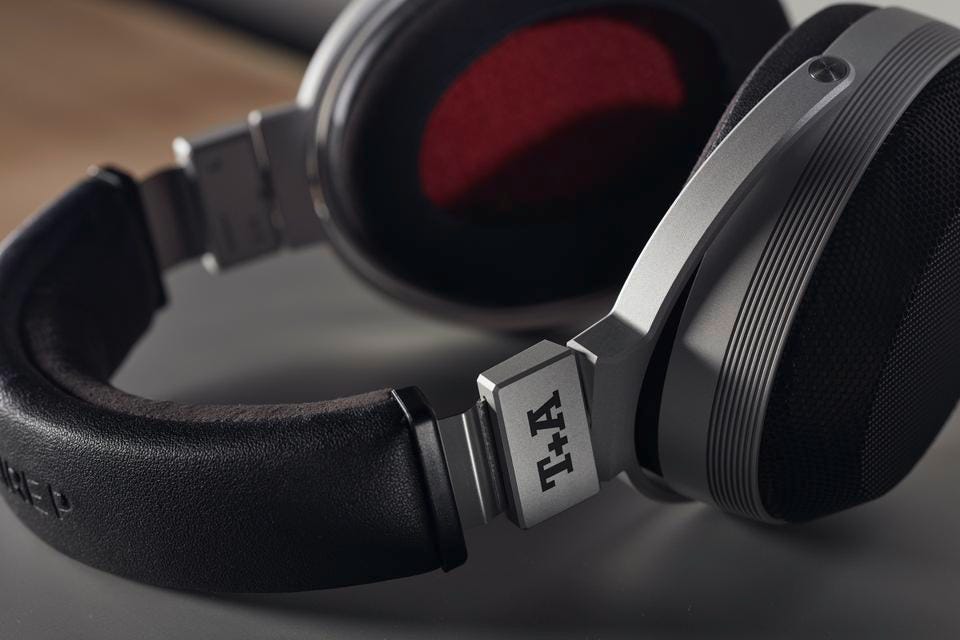
The T+A Solitaire T Pro replaces the original Solitaire T, bringing a newer wireless platform, broader connection options and Dolby Atmos functionality.
But the original also lasted longer between charges.
That deserves a place in the conversation, because choosing headphones should come down to how they fit your listening. A new model name doesn’t answer that for you.
What Made the Original Solitaire T Interesting?
For me, the appeal of the Solitaire T was its flexibility.
You could listen wirelessly while travelling, connect by USB-C at your desk, then use an analogue cable with your headphone amplifier at home.
Crucially, passive wired listening didn’t need battery power. A flat battery meant losing the powered features, rather than losing the use of your headphones.
The T Pro keeps that approach. It gives you several ways to listen without requiring a different pair of headphones for every situation.
What Does the T Pro Add to Wireless Listening?
The original Solitaire T supported Bluetooth 5.1 with codecs including AAC and aptX HD. The Pro moves to Bluetooth 6.0 and adds options including aptX Adaptive, aptX Lossless and LDAC.
The useful question is whether your source can use them.
A codec listed on the headphone’s specification sheet only becomes relevant when the device at the other end supports it too. Buying the Pro won’t automatically give every phone access to every wireless format.
This is where matching matters. Tell me which phone or music player you use, and we can establish which features you’ll actually benefit from.
From HQ Mode to Studio Pro
The original T offered a dedicated HQ mode. The Pro introduces Studio Pro mode, using a dedicated ESS Sabre DAC and analogue amplification.
That tells us something about the signal path. It doesn’t tell us how much more you’ll enjoy your favourite album.
I’m interested in whether a voice feels convincing, whether a busy arrangement remains easy to follow, and whether you want to keep listening. Those are questions for an audition with familiar music.
Studio Pro is a feature worth exploring, rather than a name I’d use as proof of better sound.
Dolby Atmos: Relevant Beyond Music
The Pro also adds Dolby Atmos functionality, extending its appeal to compatible spatial audio and entertainment.
If your headphones regularly move between albums, films and television, that could be a meaningful addition.
If you mainly listen to stereo recordings, it may play a smaller part in your decision. There’s no requirement to value every feature equally.
Battery Life: The Original T Goes Longer
Here is one area where the newer model gives ground.
| Manufacturer’s quoted endurance | Solitaire T | Solitaire T Pro |
|---|---|---|
| Standard operation | Up to 70 hours | Up to 50 hours |
| Dedicated listening mode | Up to 35 hours in HQ | Up to 25 hours in Studio Pro |
Actual endurance varies with use, but the difference is clear.
The Pro’s figures may comfortably cover your routine. For someone regularly taking long journeys, however, the original T’s longer endurance remains an advantage.
Should Original Solitaire T Owners Upgrade?
The original is no longer available through Audio Concierge, but existing owners have a different decision from someone buying their first pair.
If you enjoy yours and it works well with your source, the Pro’s arrival doesn’t change that.
I’d consider upgrading when its additions address something you want: access to a compatible wireless codec, Dolby Atmos functionality, or an opportunity to reassess your listening setup.
For a new buyer, the T Pro carries forward the range’s most appealing idea: wireless convenience, USB-C listening and passive analogue use in one pair.
The next step is finding out how that fits your music and your equipment.
Explore the T+A Solitaire T Pro’s official features, or contact Audio Concierge to discuss buying a pair.
Tell me how you listen. That’s where the useful conversation starts.