 Skip to content

No products in the basket.




 Free UK Delivery Over £100
 1 Year Manufacturer's Warranty
 Authorised Partner
 Dedicated Support
 Many Payment Options inc Klarna

Description
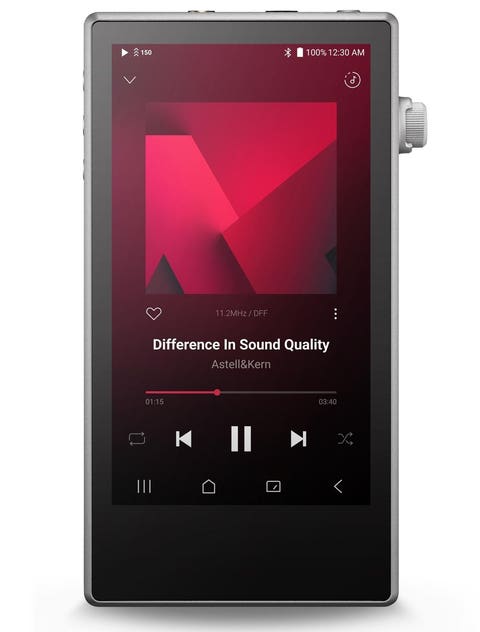
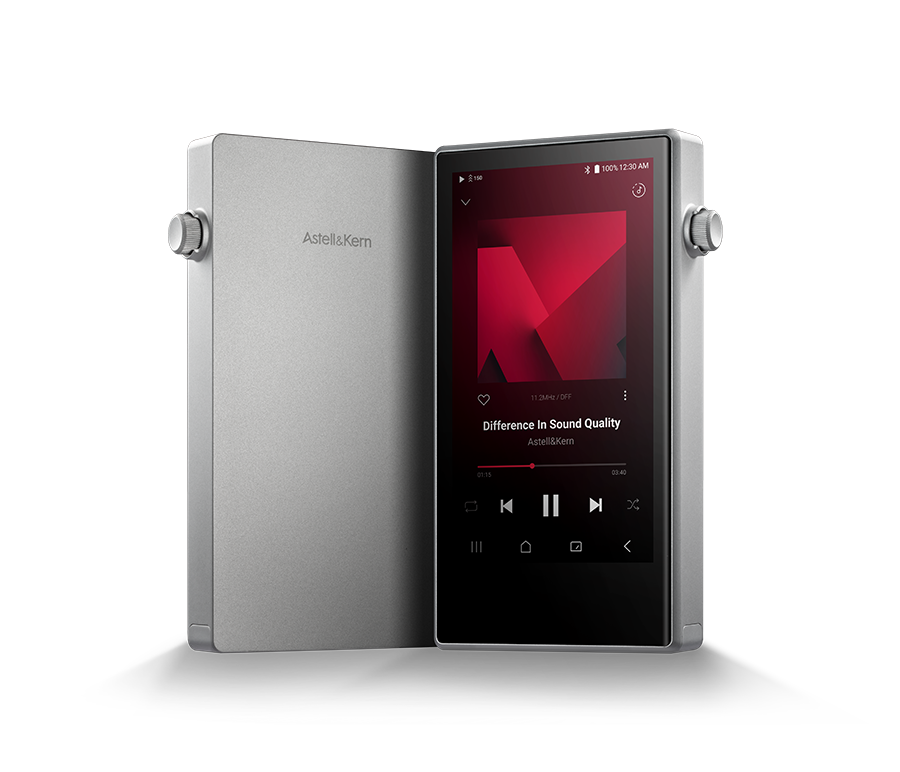
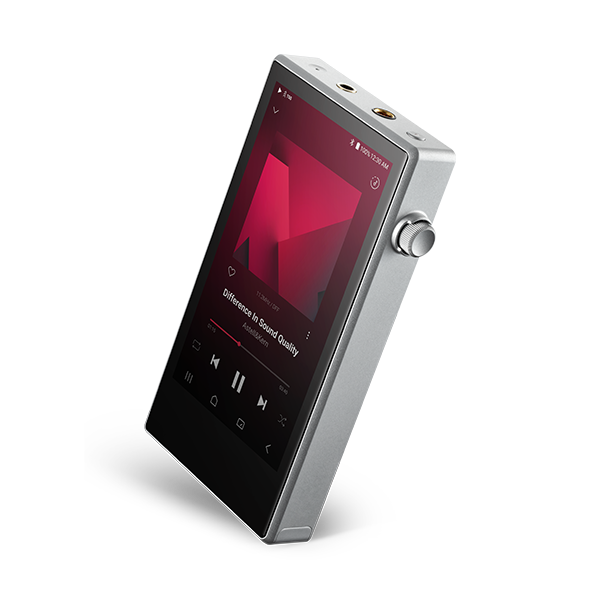
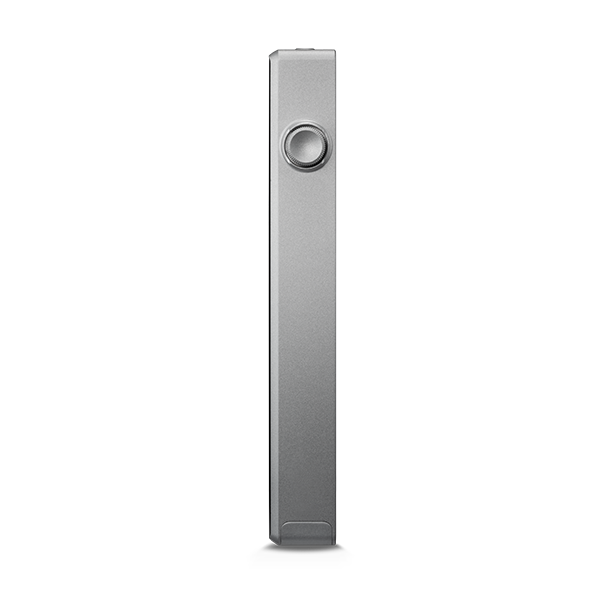
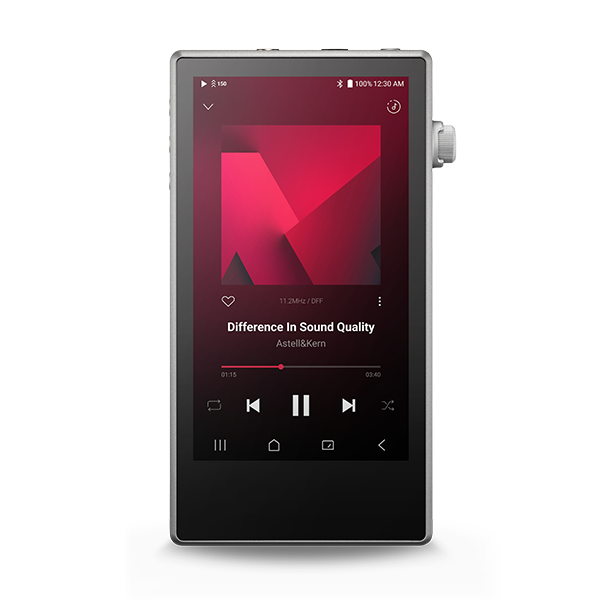
Astell&Kern PD5 Digital Audio Player
The New Generation of Astell&Kern’s Compact High-End Music Player
The Astell&Kern PD5 is the new compact high-performance digital audio player from one of the most established names in portable high-end audio.
For me, this is a particularly interesting Astell&Kern release because the PD5 takes the concept behind the excellent A&norma SR35 and pushes it considerably further.
The SR35 has been one of my favourite compact Astell&Kern players because it managed to deliver genuine high-end portable sound without becoming unnecessarily large or heavy. The new PD5 follows the same philosophy, but almost everything underneath has moved forward.
You now get an Octa-DAC architecture using eight Cirrus Logic CS43198 DACs, switchable Quad and Octa DAC operation, up to 8Vrms balanced output, an Octa-Core processor, a larger 4.1-inch display, up to 28 hours of battery life and Astell&Kern’s new EnviroTune technology.
In other words, this isn’t simply an SR35 with a new case.
The PD5 is a substantial evolution of Astell&Kern’s compact player concept and, in many respects, brings technology that we would previously have associated with much more expensive A&K players into a more accessible and genuinely portable package.
For anyone looking for a premium Astell&Kern digital audio player in the UK, the PD5 could be one of the most interesting models in the range.
Eight DACs in a Compact Astell&Kern Player
The headline specification of the Astell&Kern PD5 is undoubtedly its Octa-DAC architecture.
Astell&Kern has used eight Cirrus Logic CS43198 DAC chips inside the PD5.
That’s particularly interesting when you compare it with the outgoing SR35, which used four of the same CS43198 DACs in its Quad-DAC architecture.
However, throwing more DAC chips into a player doesn’t automatically make it better.
What matters is what Astell&Kern has done with them.
The PD5 allows you to switch between Quad-DAC and Octa-DAC modes, effectively giving the player two different operating configurations depending on how and where you’re listening.
In Quad-DAC mode, the emphasis is on efficiency and battery life. Balanced output reaches an impressive 6Vrms, while battery life can extend to approximately 28 hours under Astell&Kern’s specified test conditions.
Switch over to Octa-DAC mode and the PD5 concentrates on maximum performance. Balanced output increases to 8Vrms, with Astell&Kern quoting around 15 hours of playback.
I really like this approach.
There are plenty of occasions where you simply don’t need maximum output and eight DACs running continuously. If you’re using sensitive IEMs on a train or listening while travelling, the extra battery life of Quad-DAC mode makes a lot of sense.
Sit down with a demanding pair of headphones and you can switch into Octa-DAC mode and access everything the PD5 has available.
It makes the PD5 a genuinely versatile portable player rather than one permanently optimised for a single use.
Astell&Kern PD5 vs SR35 – What’s Changed?
This will probably be the biggest question for existing Astell&Kern owners.
The Astell&Kern SR35 was an exceptionally capable little player, and there are plenty of them out there being used with some extremely good headphones and earphones.
So is the PD5 actually a meaningful upgrade?
On specification alone, yes – and quite a substantial one.
The SR35 uses four Cirrus Logic CS43198 DACs and allows you to switch between Dual and Quad-DAC operation. The PD5 doubles the maximum DAC count to eight and switches between Quad and Octa-DAC configurations.
The SR35’s maximum balanced output is 6Vrms in High Gain.
The PD5 reaches 6Vrms balanced in Quad-DAC mode and 8Vrms balanced in Octa-DAC mode.
That additional output gives the PD5 considerably more scope when partnering it with demanding full-size headphones.
Battery life has also taken a significant step forward.
The SR35 was already excellent in this respect, with Astell&Kern quoting up to approximately 20 hours of continuous playback. The PD5 stretches this to as much as 28 hours in Quad-DAC mode.
Processing has moved from the SR35’s Quad-Core CPU to an Octa-Core CPU in the PD5, while Bluetooth moves from version 5.0 to Bluetooth 5.3.
The screen has grown as well, from the SR35’s wonderfully compact 3.6-inch display to a 4.1-inch 720 x 1280 touchscreen.
The result is a player that’s slightly larger than the SR35, but still small enough to retain the genuinely portable character that made the SR series so appealing.
PD5 vs SR35 at a Glance
| Specification | Astell&Kern PD5 | Astell&Kern SR35 |
|---|---|---|
| DAC | 8 x Cirrus Logic CS43198 | 4 x Cirrus Logic CS43198 |
| DAC Modes | Quad / Octa | Dual / Quad |
| Processor | Octa-Core | Quad-Core |
| Maximum Balanced Output | 8Vrms | 6Vrms |
| Maximum Unbalanced Output | 4Vrms | 3.1Vrms |
| Display | 4.1-inch | 3.6-inch |
| Maximum Battery Life | Approx. 28 hours | Approx. 20 hours |
| Bluetooth | Bluetooth 5.3 | Bluetooth 5.0 |
| Internal Storage | 64GB | 64GB |
| Expandable Storage | microSD up to 1.5TB | microSD |
| Balanced Headphone Output | 4.4mm | 2.5mm + 4.4mm |
| Unbalanced Output | 3.5mm | 3.5mm |
| Weight | Approx. 198g | Approx. 184g |
More Power for Serious Headphones
One specification that shouldn’t be overlooked is the PD5’s 8Vrms balanced output in Octa-DAC mode.
The SR35’s 6Vrms output was already impressive for such a compact player, and it meant the little A&K could be partnered with far more than sensitive in-ear monitors.
The PD5 pushes this another step.
An 8Vrms maximum balanced output gives you substantially more flexibility with full-size headphones while retaining the ability to use the PD5 as an everyday portable player.
That’s important.
There are increasingly powerful DAPs available, but some have become almost transportable rather than portable. Astell&Kern appears to have deliberately kept the PD5 compact enough to remain something you can realistically carry every day.
For many listeners, that balance is far more useful than simply chasing the largest possible output figure.
Up to 28 Hours Battery Life
Battery life has always been one of the SR35’s strongest features and thankfully Astell&Kern hasn’t forgotten that with its successor.
In fact, they’ve improved it considerably.
The PD5’s 4,000mAh battery can provide up to approximately 28 hours of continuous playback in Quad-DAC mode, based on Astell&Kern’s testing with 16-bit/44.1kHz FLAC files, the screen switched off and volume at 50.
Select Octa-DAC mode and the figure drops to around 15 hours, which is understandable considering the additional DAC circuitry and higher available output.
This ability to choose is one of the cleverest things about the PD5.
When you’re travelling, commuting or using efficient IEMs, Quad-DAC mode gives you tremendous battery life.
When ultimate performance takes priority, switch to Octa-DAC.
Simple.
EnviroTune – Astell&Kern Adapts to Your Surroundings
The PD5 also introduces EnviroTune, one of the more unusual technologies we’ve seen incorporated into an Astell&Kern portable player.
Anyone who listens while commuting knows that ambient noise changes the way we perceive music.
Low-frequency train noise, aircraft cabins, traffic and other environmental sounds can mask parts of a recording. The usual reaction is simply to increase the volume.
EnviroTune takes a more sophisticated approach.
Using its built-in microphone, the PD5 analyses surrounding noise across different frequency bands and automatically compensates for musical information that would otherwise become masked by the environment.
The idea isn’t simply to make everything louder. It’s designed to maintain more of the perceived detail and balance of the recording as your surroundings change.
EnviroTune supports PCM material up to 24-bit/192kHz.
It’s a genuinely interesting feature on a portable player because it’s addressing one of the realities of portable listening rather than adding technology simply for the sake of another specification.
ESA – Enhanced Signal Alignment
The PD5 also benefits from Astell&Kern’s proprietary ESA – Enhanced Signal Alignment – technology.
Digital audio reproduction isn’t only about frequency response and resolution. Timing is equally important.
Different frequencies passing through an audio system can experience slightly different delays – generally referred to as group delay.
Astell&Kern’s ESA technology is designed to minimise these timing differences by improving the alignment of frequency signals through the audio path.
The intention is greater clarity and more accurate reproduction without disrupting the timing relationships contained within the original recording.
It’s another example of technology filtering down through the Astell&Kern range rather than the company relying solely on the number of DAC chips to differentiate the PD5.
TERATON ALPHA Technology
The PD5 also incorporates the latest development of Astell&Kern’s TERATON ALPHA audio technology.
TERATON ALPHA isn’t a single component.
It’s Astell&Kern’s approach to managing several fundamental areas of digital audio reproduction, including power noise, amplification, power efficiency and the final audio output stage.
These things aren’t particularly glamorous when you’re reading a specification sheet, but they’re incredibly important when you’re dealing with sensitive IEMs and high-resolution recordings.
A great DAC chip means very little if the surrounding power supply and analogue circuitry aren’t equally well engineered.
This is an area where Astell&Kern’s experience really shows.
I’ve been dealing with Astell&Kern since the original AK100 arrived back in 2013, and one of the reasons the company has remained at the forefront of high-end portable audio is that they understand a premium DAP needs to work as a complete audio system rather than a collection of impressive components.
Digital Audio Remaster – DAR
The PD5 also includes Astell&Kern’s Digital Audio Remaster (DAR) technology.
DAR allows compatible material to be upsampled to higher sample rates before playback.
PCM material from the 44.1kHz family can be converted up to 352.8kHz, while material based around 48kHz can be converted up to 384kHz.
There’s also a DSD option capable of converting compatible PCM material below 192kHz to DSD128.
Importantly, DAR can be switched on or off.
That’s exactly how I think a feature like this should work.
Some listeners will love what upsampling brings to their favourite recordings, while others will want everything played natively. The PD5 gives you the choice.
Full Android and Music Streaming
Modern digital audio players aren’t simply repositories for FLAC files anymore.
Streaming has become fundamental to how most of us discover and listen to music, and the PD5 runs a full Android operating system, making it a far more flexible platform for modern streaming services.
Combine that with dual-band 2.4GHz/5GHz Wi-Fi and the PD5 becomes equally comfortable playing a carefully curated high-resolution library from microSD or accessing your preferred streaming platform.
There’s 64GB of internal storage, plus a microSD card slot supporting cards up to 1.5TB, giving serious music collectors plenty of room for locally stored high-resolution music.
Bluetooth 5.3 with LDAC, aptX HD and LHDC
Wireless connectivity has also moved forward from the SR35.
The PD5 incorporates Bluetooth 5.3 with support for SBC, AAC, aptX HD, LDAC and LHDC.
Personally, if I’m buying a player of this quality, I’m going to spend most of my serious listening time connected by cable to make the most of its DAC and amplifier architecture.
However, Bluetooth remains incredibly useful.
Whether you’re connecting to wireless headphones, a car audio system or another Bluetooth device, it’s good to see Astell&Kern bringing the wireless side of the player up to date as well.
Is the Astell&Kern PD5 Worth Upgrading to From
Additional information
| Weight | 2 kg |
|---|---|
| Dimensions | 20 × 15 × 10 cm |
| Brand | Astell&Kern |
| Country | South Korea |
| Enclosure Material | |
| Colour | |
| Display | 4.1inch 720 x 1280 Touch screen |
| DAC | Cirrus Logic CS43198 x8 (Octa-DAC) |
| Continuous Playback Time | About 28 hours (Standard : FLAC, 16bit, 44.1kHz, Vol.50, Quad-DAC, LCD Off) |
| Built-in Memory | 64GB [NAND] |
| External Memory | microSD (Max 1TB) x1 |
| Streaming | Native TIDAL, Install Apps |
| Product Weight | ~198g |
| Dimensions | 2.74” (69.7mm)[W] x 4.71” (119.7mm)[H] x 0.63” (16.1mm)[D] |
| Google Product Name | Astell&Kern PD5 |
| Source Termination | 3.5mm, 4.4mm Balanced |
Reviews (0)
Only logged in customers who have purchased this product may leave a review.
Related products
Reviews
There are no reviews yet.